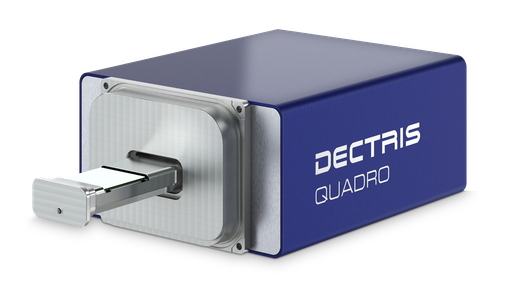
Your microscope will be asked to do things that were not planned: 4D STEM this year, in-situ TEM next year, and maybe 3D electron diffraction the next? Each method seems to call for its own camera, and few labs can buy one per technique. Four recent papers, on four very different instruments, show one detector doing all of these jobs.

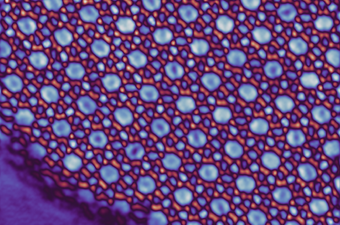
4D STEM acquires a diffraction pattern at every probe position as the electron beam is scanned across the specimen. An overview of the method and its principal applications is given in.
The question of what constitutes a good 4D STEM dataset has no single answer, and it depends on the intended analysis. A dataset suitable for virtual bright-field imaging is not necessarily suitable for ptychography, and a dataset for strain mapping would be poorly suited to differential phase contrast. The acquisition strategy must be chosen with the downstream analysis in mind.
This article discusses several common 4D STEM applications and the acquisition parameters that affect dataset quality for each. A broader survey of techniques enabled by 4D STEM is also given in
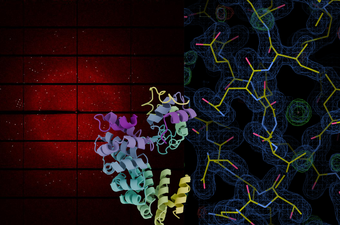
Explore different MX job templates available on DECTRIS CLOUD for credible and defensible structural synchrotron X-ray data analysis.
We were honored to participate in the MicroED Short Course organized by NYSBC, SEMC, and NCCAT. During the course, Clemens Schulze-Briese from DECTRIS presented a talk entitled “Novel Applications in 3D ED Using Direct Electron Hybrid Pixel Detectors.” This video features a recording of his presentation.
Learn how KAUST’s Kelvin pushes electron microscopy limits with upgrades and the ARINA detector, achieving high-resolution imaging on beam-sensitive materials.
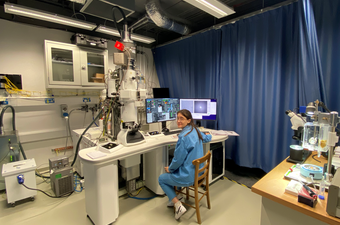
A purpose-built electron cryo-microscope, running at 100 keV, promises to reduce the cost and complexity of studies on biological structures.

Learn about the inner workings of the electron microscopy facilities at the PSI in this interview with Dr. Elisabeth Müller and Dr. Emiliya Poghosyan!

What does it mean to develop for the scientific community?

Crème de la crème of Electron Energy Loss Spectroscopy (EELS)

What does Ptychography bring to the table, and how can we benefit from it?


